At 6:30 in the morning on Hampden Avenue, the lights come on inside a small café before almost anything else nearby is awake. Runners peel off the High Line Canal trail for a coffee. Dog walkers loop back through on their second pass of the morning. None of this happens inside Cherry Hills Village itself. The café sits just over the line, on the city's northern boundary.
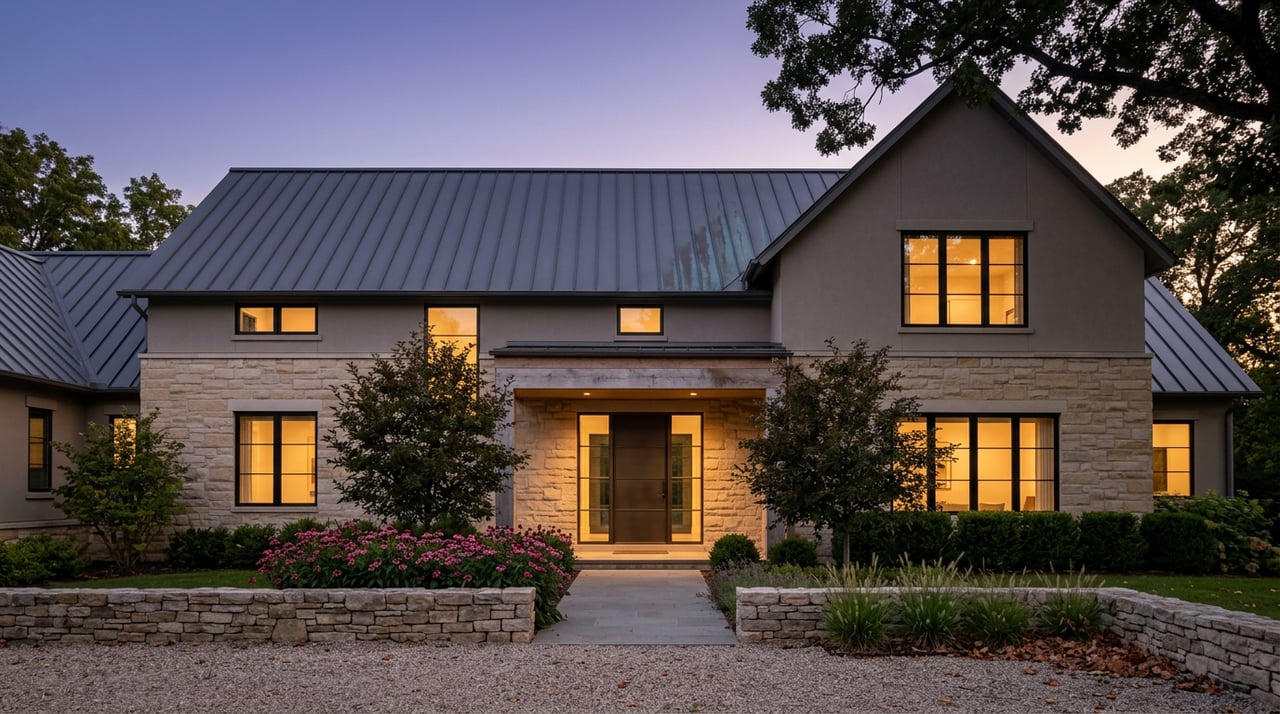
Cherry Hills Village has never had a commercial district. Not a fading one, not a planned one that stalled out, none at all. Drive every street in the city's roughly 6.5 square miles and you will not find a shop window, a restaurant sign, or a strip of parking meters. That's not neglect. It's more than eighty years of deliberate zoning, and it means the city solved a problem every established suburb eventually faces, where the community actually gathers, without ever building the thing most cities build to solve it.
The City That Zoned Out Its Own Downtown
Cherry Hills Village incorporated in 1945 with a specific intention: keep the land residential and keep it that way permanently. Unlike neighboring Greenwood Village, home to the office towers of the Denver Tech Center, or Cherry Creek North's retail corridor a short drive north, Cherry Hills held its zoning to residential and equestrian use only. The tradeoff is real. Residents can't walk to a bakery or a hardware store without leaving the city limits. What's less obvious until you look closely is what happened to the space that would have gone to a shopping center instead. It didn't stay empty. It went to a farm.
Where the Coffee Shop Actually Landed
Lavender Coffee Boutique opened its second Denver-area location directly on Hampden Avenue in February 2026, on the boundary line separating Cherry Hills Village from Denver proper. It's a small detail, but a telling one. The business most closely tied to the neighborhood's morning routine, the one that shows up in every account of the area's wellness culture, physically cannot exist inside the city it serves. It sits a few blocks north, close enough that a walker on the canal trail can detour in without leaving their usual loop, but under an entirely different zoning code.
A Farm Instead of a Storefront
If commerce can't set up inside the village, something else has to serve as the place people actually go. In Cherry Hills Village, that role fell to a farm.
Quincy Farm sits on 17.5 acres straddling the High Line Canal, an oddly rural interruption inside a city built almost entirely on estate lots. The farmhouse dates to 1898, built by the Hopkins family, and it's the oldest intact farmhouse left in the village, listed on the National Register of Historic Places. When longtime owner Catherine "Cat" Anderson died, her estate transferred the property to the City of Cherry Hills Village in 2016, with a conservation easement attached that keeps most of the land permanently undeveloped.
For years after the gift, the farm sat mostly closed while the city and a local nonprofit, Cherry Hills Land Preserve, worked out how to open a century-old private estate to public use without losing what made it worth protecting in the first place. That work reached a milestone last year. The farm's centerpiece, a barn originally built in 1934, underwent a full renovation starting in 2024 and reopened to the public on June 22, 2025, with a celebration that included live raptor presentations, food trucks, and story time for kids. As Cherry Hills Land Preserve describes the property:
"Quincy Farm reminds us of the simple joy of being outdoors in a place that feels timeless."
That barn is now the closest thing the city has to a town hall that isn't actually City Hall. Cherry Hills Land Preserve runs a full season of programming there, including an annual Earth Day celebration each April and gardening workshops that draw a broader crowd every year. The city also secured a $241,000 Arapahoe County open space grant to improve wildlife habitat around the farm's pond, a separate project but part of the same push to make the property function as public infrastructure rather than a preserved artifact behind a fence.
The Trail Is the Actual Street
None of this works as a gathering spot if people have to drive to it, and mostly they don't.
Quincy Farm sits directly on Segment 13 of the High Line Canal Trail, the stretch of the 71-mile canal path that runs north from Belleview Avenue in Greenwood Village to Three Pond Park at 4100 South Colorado Boulevard in Cherry Hills Village. It's a short segment, under three miles with a modest 62-foot elevation gain over crusher-fine gravel, easy enough that it functions as a walking loop rather than a workout. Visitors reach the farm's east side by crossing a footbridge directly off the canal path. The farm isn't a destination you plan a trip around. It's a stop along a walk you were already taking.
The same corridor carries the city's other defining pastime. Cherry Hills Village has kept an active equestrian culture that shows up in named places like the John Meade Riding Ring, and current trail guides for Segment 13 tell walkers and cyclists to expect horses sharing the path, not as a novelty but as a routine feature of the route.
The City Runs Its Own Calendar, Too
Alongside the farm's nonprofit-run programming, the city government maintains a second, smaller calendar of its own, run through the Parks, Trails and Recreation Commission on a budget that makes clear how local this actually is.
March 2026 commission meeting minutes show the group works with roughly $10,000 a year for park improvements, with anything larger routed into the city's separate capital budget process. The Commission's recurring programming, per those same minutes, centers on three events residents have specifically asked the city to keep going:
- A spring Scavenger Hunt through the city's trail system
- A Winter Celebration
- A Movie Night
Feedback on these events was strong enough, the minutes note, that commissioners are already discussing whether to revive a retired Trail Passport Program, where participants stamp a passport at boxes along the trails and bring a completed one to City Hall for a prize.
Two organizations, a city commission with a five-figure budget and a land trust running a renovated barn, now do the job a commercial district would normally do in a city this size. That's not a small distinction if you're trying to understand what actually anchors daily life here. It also explains why searching for restaurants or a downtown near Cherry Hills Village turns up so little. There isn't a downtown to find. There's a farm, a trail, a handful of parks, and a coffee shop just outside the line.
If you're curious how a market with no commercial zoning holds its character over time, or you're weighing a move into Cherry Hills Village or one of Denver's other premium submarkets, Stuart Crowell works this area closely and welcomes a conversation. Request a private market valuation or ask about off-market opportunities whenever you're ready.
This article is general information, not legal, tax or financial advice. Consult a qualified professional about your situation.