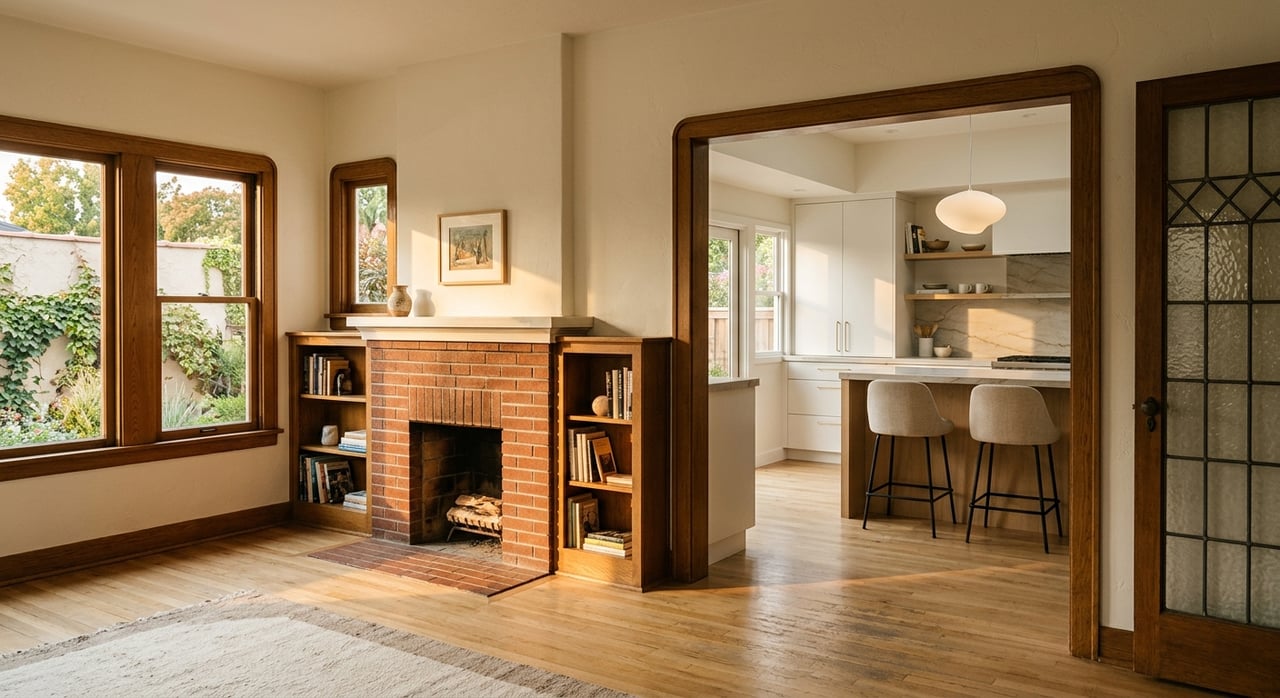
If you are torn between a charming bungalow and a sleek new build in Denver’s Highlands, you are not alone. This is one of the few neighborhoods where historic character and modern infill sit side by side, often at surprisingly similar price points. The right fit usually comes down to how you want to live, what kind of upkeep you can handle, and which features matter most day to day. Let’s dive in.
Why Highlands makes this choice unique
Highlands is not a generic comparison between old homes and new homes. In this part of Denver, the housing stock reflects a long history that started with the Town of Highlands in 1875 and continued after annexation to Denver in 1896.
That history still shapes the neighborhood today. Potter Highlands and nearby pockets are known for Queen Anne, Craftsman Bungalow, Classic Cottage, Denver Square, and other early architectural styles, while newer townhomes, condos, and infill projects bring a very different kind of living experience.
The setting also matters. Highlands remains a highly walkable urban neighborhood, with Redfin reporting a Walk Score of 85, Transit Score of 55, and Bike Score of 89 as of June 2026. That means both historic homes and new builds benefit from the same strong location story.
Price gaps are narrower than many buyers expect
One of the biggest surprises in Highlands is how much asking prices overlap. Redfin currently shows new homes in Highland at a median listing price of $852,000, townhomes at a median of $950,000, and vintage homes at a median of $855,000.
That does not mean every property is directly comparable. It does mean the decision is often less about choosing the cheaper category and more about choosing the lifestyle, layout, and maintenance profile that best matches your priorities.
The broader market also remains active. In May 2026, Highland’s median sale price was $999,664, up 23.4% year over year, with a 98.4% sale-to-list ratio and 8.9% of homes selling above list.
What historic bungalows offer
Character you can feel
Historic bungalows and older homes in Highlands tend to deliver details that are difficult to recreate. Front porches, mature brickwork, wood-frame construction, higher ceilings, exposed materials, and established lot patterns all contribute to a sense of place that many buyers value.
Current listings show that these homes are often updated rather than frozen in time. Examples include an 1889 rowhome with exposed brick and an updated kitchen, a 1905 brick bungalow with a front porch and newer mechanical systems, and a 1918 bungalow with three bedrooms upstairs plus extra basement space.
More traditional outdoor living
If you want a backyard, garden space, or a front porch that connects you to the street, older homes often have the edge. In Highlands, that can mean larger lots, patios, raised garden beds, or simply a more classic relationship between the home and the yard.
That said, this is not a universal rule. Some historic homes have smaller footprints or have been extensively reworked, so each property still needs a close look.
Flexible space in familiar forms
Many vintage homes offer usable space in ways that still work well today. Basements, detached outdoor areas, and room layouts that have evolved through remodeling can give you more flexibility than the square footage alone suggests.
At the high end, the range can be dramatic. A restored 1890 Victorian like the Lumber Baron Inn shows how large-format historic properties in this area can support very expansive living, although that is clearly an outlier rather than the norm.
What new builds offer
Turnkey interiors and modern systems
If your priority is move-in-ready living, newer homes often make a strong case. New construction in Highlands tends to feature open-concept layouts, current finishes, newer mechanical systems, and design choices that align with how many buyers live today.
Examples in the current market include modern residences with large rooftop decks, EV-ready garages, guest suites, and contemporary floor plans. For buyers who do not want to take on immediate projects, that can be a major advantage.
Vertical living and amenity-driven design
Many newer townhomes, condos, and infill homes trade yard space for lifestyle features. Instead of a deep backyard or broad front porch, you may get a rooftop deck, skyline views, attached parking, a large kitchen island, or low-rise density close to neighborhood amenities.
This works especially well if you spend more time enjoying the neighborhood than maintaining outdoor space. It can also appeal to buyers who want a lock-and-leave feel without leaving Highlands.
Variety within the new-build category
It is important not to overgeneralize. In Highlands, new construction does not always mean a large single-family home. Some options are compact condos with efficient floor plans, while others are spacious infill homes with several levels of living space.
That is why the category matters less than the specific product. A modern condo and a three-level new build may both be called “new,” but they serve very different needs.
Maintenance is often the deciding factor
Historic homes require more planning
Owning an older home in Highlands can be deeply rewarding, but it usually requires a bit more patience and planning. Historic Denver treats older-home ownership as a specialized skill set, which is a helpful signal that maintenance, contractor selection, and project timing can be more involved.
If a property is inside Potter Highlands or another Denver historic district, exterior changes that require a building or zoning permit are reviewed by Landmark Preservation. The city also states that roof and siding work on historic properties must be approved first, and demolition review applies to primary structures citywide and certain accessory structures in historic districts.
New builds often reduce near-term upkeep
Newer homes generally reduce near-term maintenance exposure. The direction of that comparison is supported by industry analysis showing lower operating and maintenance costs per dollar of home value for newer homes, though the exact savings depend on the property.
That said, lower maintenance does not always mean lower total monthly cost. HOA fees, the quality of finishes, and how much of the structure is truly new can all affect the real cost picture.
Remodeling freedom is not the same in every home
Historic district rules matter
If you are buying a bungalow or Victorian in a designated historic district, it is wise to understand the rules before you fall in love with a renovation idea. Exterior work may involve approvals and longer timelines, especially for visible changes.
That does not mean you cannot improve the home. It means your plans may need to align with local preservation standards, which can influence budget, design choices, and project timing.
Newer homes may offer fewer constraints
With newer townhomes and infill homes, the path for changes is often more straightforward, though not always unlimited. You may still need to account for HOA rules, attached construction, or lot-specific restrictions.
For many buyers, the real benefit is that less immediate remodeling is needed in the first place. If the layout, systems, and finishes already fit your life, you can spend more time settling in and less time planning projects.
Which home type may hold value better?
Scarcity supports historic appeal
The strongest case for vintage homes in Highlands is scarcity plus location. The historic stock is finite, the neighborhood remains highly walkable, and renovated examples continue to trade in a strong price band.
That can support long-term demand, especially for buyers who value architecture and established streetscapes. Still, scarcity is not a guarantee, and condition always matters.
Relevance supports newer product
The strongest case for new builds is product relevance. Many buyers want modern layouts, efficient systems, rooftop outdoor space, and attached garages that fit current habits.
In a neighborhood where buyers are paying for location as much as structure, that relevance can be powerful. Newer homes may appeal especially to buyers who want Highlands access without taking on older-home complexity.
Read smaller submarket data carefully
If you are trying to compare appreciation, it helps to be cautious with small sample sizes. Potter Highlands had a median sale price of $930,000 in March 2026, up 85.2% year over year, but only 11 homes sold and median days on market reached 84.
That kind of limited volume can make year-over-year percentages look dramatic. It is more useful to think in terms of demand drivers, scarcity, condition, and fit within the neighborhood than to rely on one headline number.
How to decide what fits your lifestyle
If you are choosing between a historic bungalow and a new build in Highlands, start with your daily life rather than the architecture alone. The better choice is usually the one that matches how you want to live over the next several years.
Ask yourself:
- Do you want porch and yard space, or would you rather have a rooftop deck?
- Are you comfortable managing older-home maintenance and possible approval timelines?
- Do you want original character, or do you prefer a turnkey interior?
- Is attached parking important to you?
- Would basement space be more useful than vertical living across multiple levels?
- Are you buying for charm, convenience, long-term hold, or some mix of all three?
In Highlands, there is no universal winner. A well-updated bungalow can be the perfect fit for one buyer, while a modern townhome with skyline views and low-maintenance living can be exactly right for another.
The key is knowing what tradeoffs you are making before you write the offer. If you want a tailored read on specific blocks, current inventory, and how each option fits your goals, Crowell Realty can help you evaluate Highlands with clarity and a concierge-level approach.
FAQs
What is the main difference between historic bungalows and new builds in Denver’s Highlands?
- Historic bungalows usually offer architectural character, porches, yards, and more traditional lot patterns, while new builds often offer turnkey interiors, modern systems, rooftop decks, and attached parking.
Are historic homes in Highlands more expensive than new builds?
- Not necessarily. Current Redfin listing data show meaningful overlap, with vintage homes at a median of $855,000 and new homes at a median of $852,000 in Highland.
Do historic district rules affect remodeling in Potter Highlands?
- Yes. In designated historic districts, exterior changes that require a building or zoning permit are reviewed by Denver Landmark Preservation, and some roof, siding, and demolition work also requires review.
Are new builds in Highlands always lower maintenance?
- Usually they reduce near-term upkeep because of newer systems and materials, but actual costs still depend on HOA fees, finishes, and the specifics of the property.
Do new builds in Highlands always have more space?
- No. Some new homes are compact condos or townhomes that prioritize rooftop decks and efficient layouts rather than larger yards or broader lot coverage.
Is a historic bungalow or a new build better for resale in Highlands?
- Both can be compelling for different reasons. Historic homes benefit from scarcity and character, while new builds benefit from modern layouts and amenities that match current buyer demand.