Thinking about adding an ADU to your Bonnie Brae property to create steady income or flexible living space? With Denver’s new citywide ADU rules, the path is clearer, and the long-term math can work if you plan carefully. If you own in this historic, tree-lined pocket of South Denver, you want a strategy that protects your main home’s appeal while building durable value. In this guide, you’ll learn the rules, costs, rents, design choices, and next steps to build an ADU to hold, not flip. Let’s dive in.
Why build to hold in Bonnie Brae
A long-term ADU gives you durable monthly income, flexibility for multigenerational living, and potential resale appeal. It also spreads risk better than a short-term flip that relies on perfect timing. Denver’s updated rules and state law have reduced zoning uncertainty, which lowers upfront risk for owners who plan to hold.
What changed in Denver ADU rules
Denver now allows ADUs citywide in residential areas. City Council adopted the citywide ADU package in November 2024, with rules effective December 16, 2024. That means most single-family lots in Bonnie Brae can host an ADU as a use by right, subject to objective standards and any overlays. You can review the update on Denver’s Citywide ADUs page for details on eligibility and standards. See Denver’s citywide ADU guidance.
Colorado’s HB24-1152 also requires most municipalities to allow one ADU and limits owner-occupancy and certain parking mandates. Denver aligned its rules with the state update. Read HB24-1152.
Can your Bonnie Brae lot host an ADU?
Start by confirming zoning and any overlays for your exact address. Denver provides zoning and ADU standards by district and context on its ADU pages. If your home is individually landmarked or inside a historic district, you will need a Certificate of Appropriateness from Landmark Preservation before building.
Check zoning and ADU standards: Denver Citywide ADUs
-
Confirm whether landmark review applies: the Citywide ADUs page outlines historic approvals
Permits and who can apply
You will need zoning approval, building permits, sewer/use and drainage permits, and trade permits. Denver processes these online. Detached ADUs often trigger separate utility reviews and inspections. Denver notes ADUs must be built by a licensed contractor, not as a homeowner permit. Review the workflow on the city’s ADU permitting page. See ADU permits and steps.
Parking, owner-occupancy, and STRs
State law limits cities from requiring owner-occupancy for ADUs in most cases, and Denver’s code aligns with that direction. Parking requirements are more flexible than before, although alley access and lot layout still matter. Short-term rentals are tightly regulated. Denver generally requires STRs to be the host’s primary residence and to hold an STR license, so most ADUs will not qualify for Airbnb-style use. For a hold strategy, plan on long-term leasing. Review Denver’s STR rules.
Costs to expect and where they add up
Total project budgets vary by type and site. Local reports show many ADUs falling in the roughly 180,000 to 350,000 dollar range for turnkey builds, with small conversions on the low side and detached cottages on the high side. Detached units typically cost more due to foundations and full utility runs.
Plan for soft costs and fees:
- Water system development charges: Denver Water treats detached ADUs as additional dwelling units. Budget for SDCs and possible service-line upgrades. See ADU guidance from Denver Water and current SDC schedules.
- Sewer and drainage permits: SUDP and related connection/inspection fees can add several thousand dollars depending on site complexity. See ADU permits overview.
Typical project timelines run months, not weeks. Expect 6 to 12 months from planning through construction depending on scope and whether you are converting space or building detached.
Expected rents and conservative modeling
Citywide one-bedroom rents in Denver have recently ranged roughly 1,494 to 1,800 dollars depending on the tracker and month, with some premium areas near Bonnie Brae posting higher numbers. A well-finished, permitted one-bedroom ADU can often command above the city median when sized and designed well. Use nearby comps to price your unit. See Denver rent context.
For a hold model, be conservative:
-
Use a 7 to 10 percent vacancy allowance given recent vacancy trends in Denver. See local vacancy context.
-
Include property management (8 to 12 percent if outsourced), maintenance reserves, utilities if owner-paid, and insurance adjustments.
-
Model a property tax increase after the ADU is added. Denver’s Assessor increases assessed value for new habitable area, which raises taxes based on the levy in effect. Learn how improvements affect assessments.
ADU types: choose for income and fit
-
Basement or internal conversion: lowest cost and fastest to market. Light and egress can limit layout, and rents may trail detached units.
-
Garage conversion or above-garage: mid-cost with good privacy. Preserves yard while offering a separate entry.
-
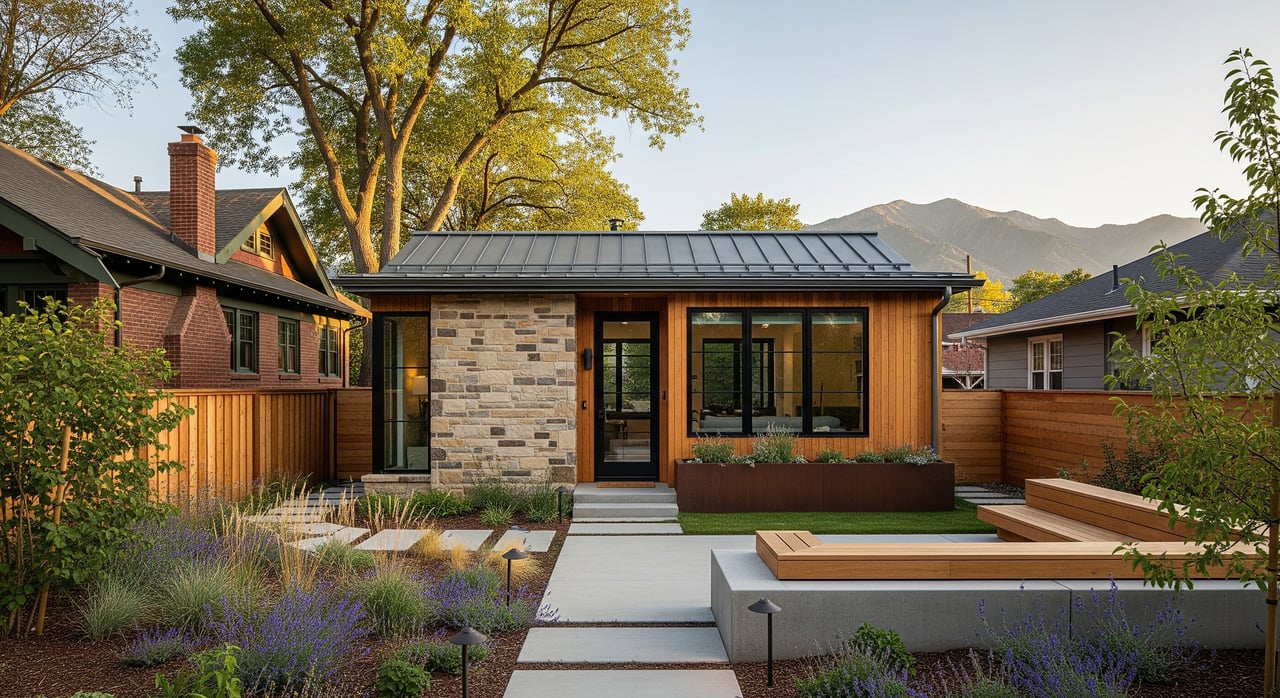
Detached backyard cottage: highest cost and typically highest rent. Expect more site work and utility costs.
Design choices that boost long-term value
Prioritize features renters stay for and appraisers recognize. A full kitchen, full bath, independent entry, strong sound separation, and in-unit or dedicated laundry increase both rentability and value. Durable finishes and efficient systems matter. Heat-pump HVAC and basic envelope upgrades can lower operating costs and improve comfort over time.
Operating and compliance
If you plan to lease the ADU long term, you will need to comply with Denver’s rental licensing program, including inspections. Noncompliance can result in fines. See reporting on rental licensing enforcement.
For utilities and services, set clear responsibilities in the lease. Submetering water or power can simplify billing if feasible. Keep a maintenance schedule, and budget for unit turns and seasonal upkeep.
Risks and tradeoffs to plan for
- Cost overruns and site surprises such as utility upgrades, soils, or remediation in older homes. Carry a contingency.
Property tax increases after reappraisal once the ADU is complete. See Assessor overview.
Historic review or design constraints if a landmark overlay applies. This can add time and shape exterior design.
Short-term rental limitations that make STR strategies unlikely for most ADUs. Review STR rules.
Funding and incentives to watch
Colorado’s ADU legislation created a state grant program and related financing support through DOLA and CHFA that flow through local jurisdictions. Watch for Denver program rollouts that could offer plan sets, fee reductions, or financing support. Explore the state’s ADU resources and ADU grant program.
Your next five steps
-
Verify your zoning and any landmark overlays for your property. Start with Denver’s Citywide ADUs page.
-
Schedule a preliminary check-in with Denver Community Planning and Development to surface setbacks, access, and obvious constraints.
-
Interview 2 to 3 ADU-experienced contractors. Request line-item bids including utilities, SDCs, soft costs, and contingency.
-
Build a conservative cash-flow model using local comps, a vacancy reserve, and a tax increase estimate. Use citywide rent context as a starting point.
-
Track any local incentives or financing options that emerge under state programs. See DOLA program updates.
Ready to evaluate an ADU on your Bonnie Brae property and price it against local comps? For tailored guidance, discreet property analysis, and a hold-first strategy that fits your goals, connect with Crowell Realty.
FAQs
Are ADUs now allowed in Bonnie Brae under Denver’s updated rules?
-
Yes. Denver’s citywide ADU update makes ADUs a use by right in residential areas, which includes Bonnie Brae, subject to objective standards and any overlays. See Citywide ADUs.
What permits do I need to build an ADU in Denver?
-
Expect zoning approval, building permits, SUDP, and trade permits. Denver uses e-permits and requires a licensed contractor for ADU building permits. See ADU permitting steps.
Can I run my Bonnie Brae ADU as an Airbnb-style short-term rental?
-
Usually not. Denver generally requires STRs to be the host’s primary residence, and a license is required, which makes most ADUs ineligible for STR use. Review STR rules.
How much rental income can a one-bedroom ADU in South Denver produce?
-
Citywide one-bedroom rents have ranged roughly 1,494 to 1,800 dollars recently, with some nearby areas transacting higher. Price using close comps and design for privacy and function. See rent context.
What utility fees should I expect when building an ADU?
-
Budget for Denver Water system development charges and possible service-line upgrades, plus SUDP and related fees. See ADU water guidance and SDC schedules.
Will my property taxes go up after adding an ADU?
- Likely yes. The Assessor adds value for new habitable area, which raises assessed value and taxes under the current levy. Learn how improvements are assessed.